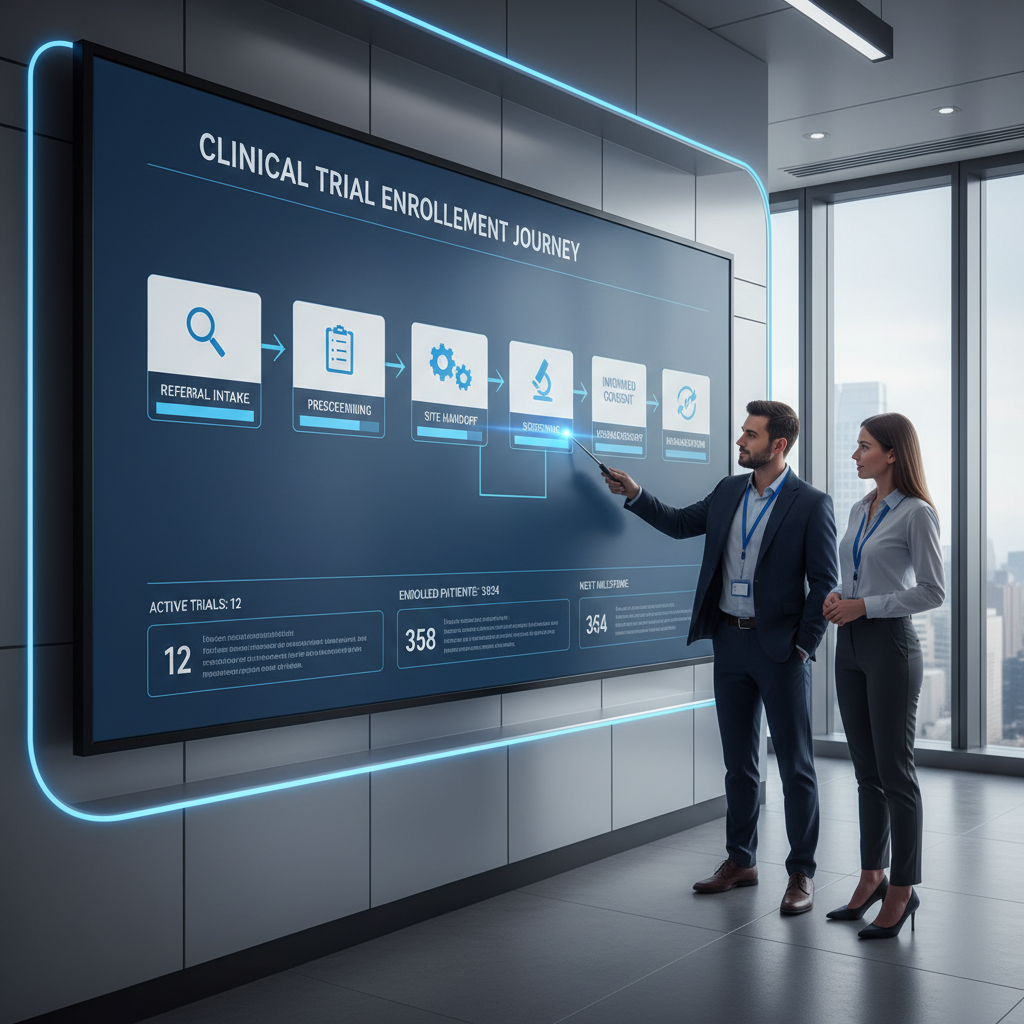
More activity, not better movement
Higher referral volume increases the number of candidates entering the pathway, but if the workflow is weak, most of that activity stalls before randomization.
Enrollment Operations Insight
More referrals create more activity, but if candidates are slowing down between intake, prescreening, follow-up, coordinator review, and screening, higher volume alone will not improve randomization progress.
When clinical trial enrollment falls behind, the first response is often to generate more referrals. More referrals feel like progress because they create more activity, more calls, and more names moving through the pipeline. But referral volume alone does not guarantee better enrollment outcomes.
If candidates are slowing down between intake, prescreening, follow-up, coordinator review, and screening, adding more referrals into a leaky workflow creates more motion without better randomization progress. The pathway itself has to be strong enough to carry candidates forward.
This insight looks at why more referrals do not always improve enrollment, where candidates slow down, and what research teams should evaluate before increasing referral volume.
Higher referral volume increases the number of candidates entering the pathway, but if the workflow is weak, most of that activity stalls before randomization.
When teams track only total referrals and total randomizations, the conversion loss happening between stages stays invisible and unaddressed.
More referrals without stronger intake and prescreening push more rework onto coordinators, which slows the candidates who were already qualified.
When referral generation is the default response to underperformance, the operational structure that actually moves candidates forward is never strengthened.
Incomplete or inconsistent referral information means the next stage cannot move forward without re-contact, which slows the whole pathway.
When early eligibility signals are not captured clearly, coordinators repeat work that should have been organized upstream.
When follow-up lacks structure, candidates lose interest or fall out of contact before they reach the next step.
When handoff is weak, coordinators restart the conversation and lose time that should go toward clinical preparation.
When candidates arrive at screening without adequate preparation, screen failures and early withdrawal increase.
When the full pathway is not connected, more referrals create more activity without better randomization progress.
Consent2Randomize helps research teams strengthen the enrollment operations layer between referral intake, prescreening, coordinator review, screening, and randomization. Instead of adding more referrals into a leaky workflow, the focus is on improving the operating structure that moves candidates forward.
Through pathway review, intake and prescreening structure, follow-up and handoff design, coordinator capacity protection, and performance visibility, Consent2Randomize helps teams identify where candidates stall and strengthen the workflow before increasing referral volume.
Formal eligibility decisions, informed consent, screening procedures, and randomization decisions remain with the research site, investigator, and study team. Consent2Randomize supports the operating workflow behind those decisions, not the clinical decisions themselves.
If this issue is showing up in your enrollment pathway, Consent2Randomize can help identify where intake, prescreening, handoff, coordinator capacity, or referral-to-randomization structure is creating friction.
We will look at your current enrollment workflow and identify where stronger operating structure can improve candidate movement.